How to Detail a Car Exterior?
Exterior car detailing follows a typical sequence: wash the vehicle, remove bonded contamination, correct paint defects when necessary, and apply protection. This guide explains a practical 7-step exterior detailing workflow, including the tools, wash technique, decontamination methods, paint correction options, and protection choices that determine the final result.
Key Takeaways
- A typical 7-step exterior detailing workflow includes wheels, pre-wash, contact wash, drying, decontamination, correction, and protection.
- A two-bucket wash with clean microfiber media can help reduce the risk of abrasive contact between dirt and the vehicle's clear coat.
- Iron removers target iron-containing fallout, while clay treatment removes remaining bonded contaminants after appropriate chemical decontamination.
- A 1-step or multi-step paint correction can reduce visible defects, but the appropriate level depends on paint condition and clear-coat preservation.
- Exterior detailing every 3–6 months can be a practical starting point, while maintenance washing every 1–2 weeks controls contamination between details.
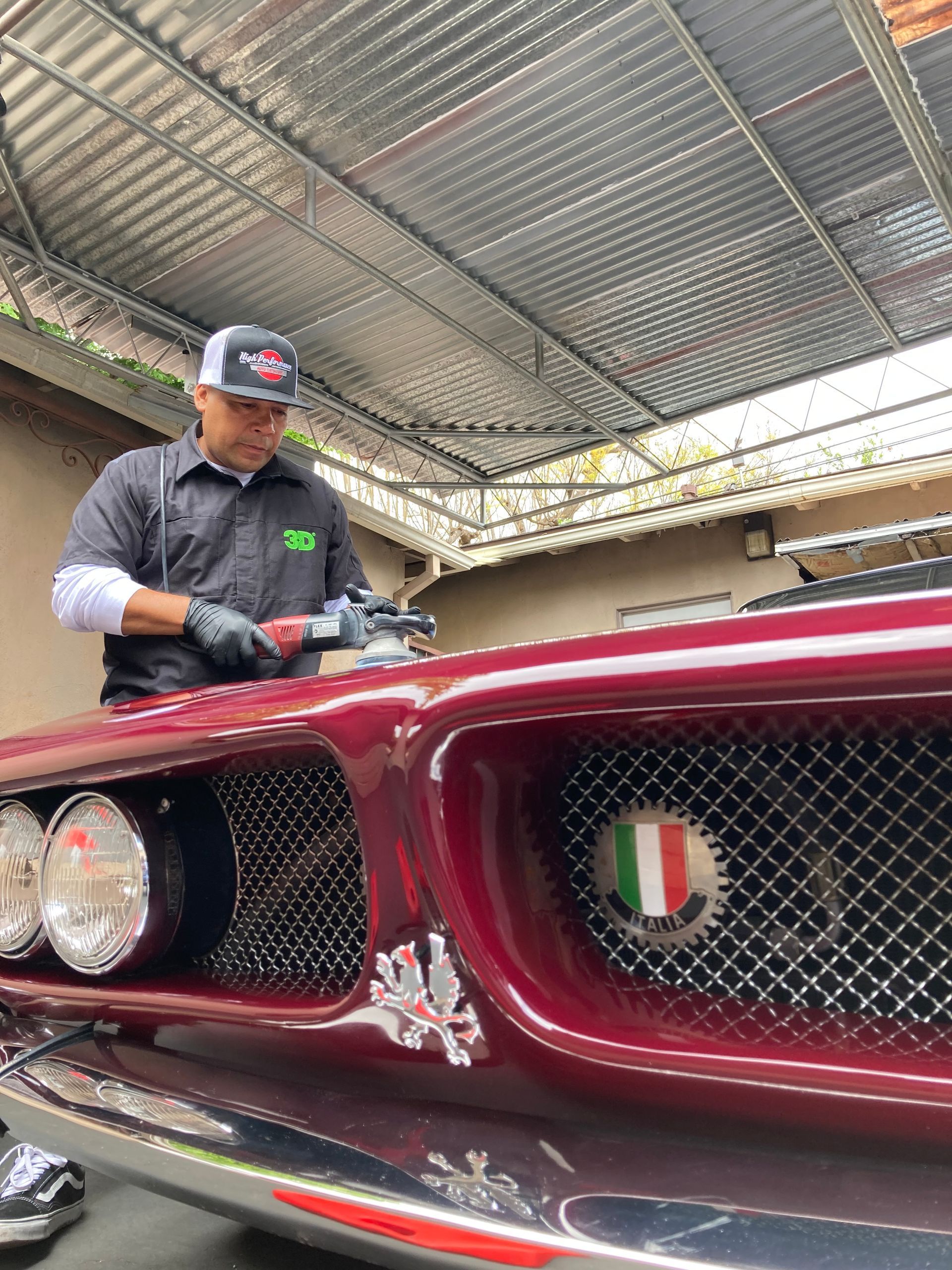
What Is Car Exterior Detailing?
Car exterior detailing is a multi-stage process that cleans, decontaminates, corrects, and protects exterior surfaces rather than simply removing visible dirt.
A basic car wash removes loose contamination, while exterior detailing evaluates the paint and other exterior materials to determine whether decontamination, correction, or additional protection is needed. Each stage generally prepares the surface for the next, but the exact sequence can vary depending on the vehicle's condition, products, and desired result.
Exterior detailing also helps manage road film, brake dust, industrial fallout, tree sap, bird droppings, and other environmental contamination. Regular maintenance can make future cleaning easier and reduce the need for aggressive cleaning or unnecessary correction.
What Supplies Do You Need to Detail a Car Exterior?
A basic exterior detail requires dedicated supplies for washing, drying, decontamination, and protection, with additional equipment needed when paint correction is performed.
The most useful way to organize the supplies is by the stage of the detailing process:
- Washing: pH-neutral car shampoo, a clean microfiber wash mitt, a suitable rinse-and-wash bucket setup, and optional grit guards.
- Pre-wash: foam or another suitable pre-wash product to loosen surface contamination before contact washing.
- Drying: clean, absorbent microfiber drying towels that minimize repeated contact with the paint.
- Decontamination: iron remover, tar or adhesive remover when needed, clay bar or synthetic clay media, and an appropriate clay lubricant.
- Wheels and tires: dedicated wheel cleaner, wheel brushes, and tire-cleaning tools.
- Protection: wax, paint sealant, or ceramic coating selected according to the vehicle and intended maintenance routine.
- Paint correction: polishing machine, appropriate pads, compound or polish, and suitable inspection lighting when correction is required.
Supplies should match the vehicle's condition; a vehicle that only needs washing and protection does not require every decontamination or correction product.
| Supply | Main Job |
|---|---|
| pH-neutral car shampoo | Contact washing |
| Microfiber wash mitt | Lifting and carrying surface dirt |
| Iron remover | Reacting with iron-containing fallout |
| Clay bar or synthetic clay media | Removing bonded contamination |
| Drying towel | Removing water with minimal contact |
| Dedicated wheel cleaner | Removing brake dust and road grime |
| Protection product | Protecting prepared paint |
Product selection should follow the manufacturer's instructions and the material being cleaned rather than assuming that one exterior product is suitable for every surface.
What Is the Correct Order to Detail a Car Exterior?
The typical exterior detailing sequence is wheels and tires, pre-wash, contact wash, drying, decontamination, paint correction when necessary, and protection. The exact order can vary depending on the vehicle, contamination, products, and type of protection being applied.
1. Clean the Wheels and Tires
Wheels, tires, and wheel wells are cleaned first because they commonly contain heavy brake dust, road grime, and other contamination. Cleaning these areas first reduces the risk of transferring heavy debris onto the paint, while dedicated tools help prevent cross-contamination.
2. Pre-Wash the Exterior
A pre-wash loosens and removes loose surface contamination before contact washing begins. Foam or another suitable pre-wash product can soften road film and surface dirt, reducing the abrasive contamination encountered during contact washing.
3. Perform the Contact Wash
The contact wash removes remaining surface contamination using lubricated wash solution and clean microfiber media. A two-bucket system separates the wash solution from the rinse water, while grit guards can provide an additional surface for rinsing and may help reduce contamination picked up by the wash media. Wash from cleaner upper panels toward dirtier lower panels and rinse the mitt frequently.
4. Dry the Vehicle
Dry the vehicle with clean microfiber towels to minimize unnecessary contact with the paint. Air drying can help remove water from mirrors, grilles, and emblems. Before chemical decontamination, follow the product's instructions regarding whether the surface should be dry or wet.
5. Decontaminate the Paint
Chemical and mechanical decontamination remove bonded contamination that remains after washing. Iron removers target iron-containing fallout, while clay removes remaining bonded contaminants. Decontamination is only needed when washing alone does not sufficiently clean the paint.
6. Correct the Paint When Necessary
Paint correction follows decontamination because polishing works more predictably on a clean surface. Inspection lighting can reveal defects such as swirls, haze, oxidation, and scratches. If the paint already has acceptable gloss, correction may not be necessary.
7. Apply Protection
Wax, paint sealant, or ceramic coating is applied after the paint has been properly cleaned and corrected. The appropriate product depends on durability, maintenance, appearance, and application requirements. Manufacturer-specific preparation and curing instructions should always take priority.
Exterior Detailing Process at a Glance
| Stage | Purpose |
|---|---|
| 1. Wheels and tires | Remove heavy wheel and tire contamination |
| 2. Pre-wash | Loosen loose surface dirt |
| 3. Contact wash | Remove remaining surface contamination |
| 4. Drying | Remove water with minimal unnecessary contact |
| 5. Decontamination | Remove bonded chemical and physical contaminants |
| 6. Paint correction | Reduce appropriate paint defects when necessary |
| 7. Protection | Protect the prepared surface |
How Do You Wash a Car to Minimize the Risk of Scratching the Paint?
Safe car washing reduces the risk of wash-induced marring by minimizing abrasive contact between loose contamination, wash media, and the clear coat.
The main goal is to remove as much loose dirt as possible before contact washing. A pre-wash, clean microfiber media, adequate lubrication, and frequent rinsing all help reduce abrasive contact.
A careful wash follows several basic principles:
- Pre-rinse or pre-wash the vehicle to remove loose surface contamination.
- Use clean microfiber wash media rather than a heavily contaminated mitt.
- Keep the paint well lubricated during contact washing.
- Rinse the mitt frequently between sections.
- Wash cleaner upper panels before dirtier lower panels.
- Use light pressure and allow the wash media and lubrication to do the cleaning.
- Replace heavily contaminated media rather than continuing to use it.
The two-bucket method separates wash solution from rinse water, helping reduce contamination transfer. Rinse the wash mitt after each section before returning it to the wash bucket. Grit guards can provide an additional surface for rinsing debris from the mitt.
Wash direction matters less than media cleanliness, lubrication, pressure, pre-washing, and rinsing technique. Straight-line motions can make any potential marring more consistent in direction but do not prevent it.
What Is Paint Decontamination and Why Does It Matter?
Paint decontamination removes bonded contamination that remains after washing and creates a cleaner, smoother surface for inspection, polishing, and protection.
A vehicle can look clean while still having bonded contamination. If the paint feels rough or gritty after washing, additional decontamination may be necessary.
Chemical and mechanical decontamination can address different types of bonded contamination:
- Iron remover: reacts with iron-containing particles such as certain brake and rail fallout and helps loosen them for removal.
- Tar or adhesive remover: can be used when compatible tar, asphalt, adhesive, or similar contamination is present.
- Clay treatment: mechanically removes bonded contamination that remains on the paint after washing and chemical treatment.
- Clay lubricant: reduces friction during mechanical decontamination and helps limit the risk of marring.
- Surface inspection: determines whether additional decontamination is actually necessary.
Chemical and mechanical decontamination address different contamination types, and the exact combination depends on the contamination present. Not every vehicle requires every decontamination step.
Decontamination is particularly useful before polishing because a cleaner surface allows polishing pads to contact the paint more consistently.
When Should You Use Polish or Paint Correction?
Paint correction is appropriate when washing and decontamination leave visible defects that can be safely reduced through polishing, but correction is not necessary for every vehicle.
The first step is inspection. Strong inspection lighting can reveal swirl marks, oxidation, haze, and scratches that may not be obvious under normal outdoor lighting.
A practical correction decision can be summarized as follows:
- Fine marring: light polishing may improve gloss and clarity.
- Mild to moderate defects: a 1-step correction may provide a balance between defect reduction and finish quality.
- Heavier defects: multi-step correction may be appropriate when the paint safely allows additional correction.
- Deep scratches: polishing may not safely remove the defect if the damage extends deeply into or through the clear coat.
- Good paint condition: correction may not be necessary when the existing finish already meets the desired standard.
A test spot can help establish the appropriate correction level before the entire vehicle is polished. This allows the detailer to compare defect reduction and finish quality while limiting unnecessary clear-coat removal.
| Correction Level | Main Goal | Typical Issue |
|---|---|---|
| Light polish | Improve gloss and clarity | Fine marring |
| 1-step correction | Balance defect reduction and finish | Mild to moderate defects |
| Multi-step correction | Maximize appropriate correction | Heavier defects and oxidation |
Deep scratches that extend through the clear coat may not be safely removable through polishing alone. Additional polishing removes more clear-coat material, so correction should always balance visible improvement with long-term paint preservation.
What Protection Should You Apply After Detailing?
Paint protection should be selected after the surface has been cleaned and corrected because wax, sealant, and ceramic coating provide different levels of durability, maintenance requirements, and performance.
Car wax generally prioritizes ease of application and gloss, while many modern paint sealants are designed to provide longer-lasting protection than traditional waxes, although durability varies by product. Ceramic coatings provide longer-term protection and hydrophobic performance when properly installed, but they do not make paint scratch-proof or prevent rock chips.
The main protection options can be compared this way:
| Protection Type | General Characteristics | Primary Strength |
|---|---|---|
| Car wax | Generally shorter-term protection; product-dependent | Easy application and gloss |
| Paint sealant | Often longer-lasting than traditional waxes; product-dependent | Durability and easier maintenance |
| Ceramic coating | Long-term protection when properly installed and maintained | Chemical resistance and hydrophobic performance |
Water behavior can help indicate whether a hydrophobic product is still exhibiting water-repellent properties. However, water beading alone cannot confirm that every protective property of a coating or sealant remains at its original level.
For ceramic coatings, an additional surface-preparation step may be required after polishing to remove polishing oils and residue before coating application. The exact preparation and curing requirements should follow the coating manufacturer's instructions.
The best protection depends on how the vehicle is driven, stored, maintained, and expected to perform rather than simply choosing the product with the longest advertised lifespan.
How Do You Finish Glass, Wheels, Tires, and Exterior Trim?
Glass, wheels, tires, and exterior trim should be finished separately because each surface requires different cleaning and protection products.
Wheels and tires are cleaned early because they carry heavy contamination, but their final dressing can be applied after the main paint work. This keeps wheel and tire products away from freshly prepared paint.
Glass should be cleaned with a suitable glass cleaner and dedicated microfiber towel, while exterior trim may require a compatible trim dressing or restorer. Tire dressing should be applied sparingly and allowed to dry according to the product instructions to prevent excess product from reaching freshly cleaned body panels.
How Often Should You Detail a Car Exterior?
A thorough exterior detail every 3–6 months is a practical starting point for many vehicles, but the ideal interval depends on driving conditions, storage, contamination, and existing protection.
Daily-driven vehicles parked outdoors may need more frequent detailing than garage-kept vehicles. Coastal exposure, road salt, industrial fallout, frequent highway driving, and prolonged UV exposure can also increase paint-maintenance demands.
A practical starting schedule is:
- Maintenance wash: often every 1–2 weeks, depending on conditions.
- Decontamination: when bonded contamination is present or surface inspection shows it is needed.
- Exterior detail: every few months or as needed based on vehicle condition.
- Paint correction: as needed based on paint condition.
- Protection renewal: according to product lifespan and manufacturer guidance.
These intervals are guidelines rather than fixed requirements; surface condition should determine when additional detailing is needed.
What Does a Professional Exterior Detail Include?
A professional exterior detail combines washing, inspection, decontamination, optional paint correction, and protection based on the vehicle's condition.
A typical professional exterior detail may include:
- Washing: pre-wash and contact wash to remove surface contamination.
- Decontamination: iron removal, tar or other chemical decontamination when needed, and clay treatment when bonded contamination remains.
- Paint correction: polishing or multi-step correction when visible defects require it.
- Exterior finishing: glass, wheels, tires, and trim treatment.
- Protection: wax, sealant, or ceramic coating applied according to the vehicle's needs.
Professional detailing packages vary by shop, vehicle condition, and the level of correction or protection requested. Not every vehicle requires every step. A maintenance detail may focus on washing and existing protection, while a comprehensive detail may include decontamination, correction, and new protection.
When comparing
detailing packages, focus on the processes included rather than labels such as “premium” or “full detail.”
What Should You Do Next After Learning the Detailing Process?
The next step is to match the detailing process to the vehicle's condition rather than automatically performing every available treatment.
A simple exterior assessment can determine whether the vehicle needs a maintenance wash, decontamination, paint correction, or new protection. A detailing checklist can help organize the required supplies and keep each stage in the correct order.
For vehicles that need professional care,
High Performance Auto Detail offers
exterior detailing in Encinitas based on the vehicle's condition and the level of cleaning, correction, and protection required.
Frequently Asked Questions
What is the fastest way to avoid swirl marks?
The best way to reduce the risk of wash-induced swirl marks is to minimize abrasive contact during every wash. Pre-washing, clean microfiber wash media, adequate lubrication, frequent mitt rinsing, and light pressure can help reduce the chance of dirt being dragged across the clear coat. Regular maintenance washing can also prevent heavy contamination from building up between washes.
Is ceramic coating better than wax?
Ceramic coating can provide longer-lasting protection, chemical resistance, and hydrophobic performance than traditional car wax, but the better option depends on the vehicle and owner's priorities. Wax may be suitable when easy application and gloss are the main goals, while ceramic coating may be preferable when longer-term durability and easier maintenance are priorities. Actual performance and durability vary by product, preparation, environment, and maintenance.
Does clay bar treatment replace polishing?
Clay bar treatment does not replace polishing because the two processes address different surface problems. Clay removes bonded contamination from the paint surface, while polishing uses abrasives to reduce defects such as marring, oxidation, and light scratches. A vehicle may require both when bonded contamination and visible paint defects remain after washing.
How do I know if my paint needs correction?
Paint correction may be appropriate when visible defects remain after washing and decontamination. Inspection lighting can reveal swirl marks, haze, oxidation, and light scratches that may be difficult to see in normal conditions. A 1-step correction may address mild defects, while multi-step correction may be appropriate when greater defect reduction is justified, and the paint can safely support it.
What is the best maintenance between full details?
Regular maintenance washing is the most important way to control contamination between full exterior details. A pH-neutral car shampoo, clean microfiber wash media, suitable drying towels, and compatible maintenance products can help preserve the vehicle's existing protection without unnecessary polishing. For many daily-driven vehicles, washing every 1–2 weeks can be a useful starting point, although local conditions may require a different schedule.
How often should a car be professionally detailed?
A professional exterior detail every few months can be a practical starting point for many vehicles, but the appropriate interval depends on the vehicle's condition, driving environment, storage, contamination, and existing protection. Daily outdoor use, coastal exposure, industrial fallout, road salt, and frequent highway driving can increase maintenance needs. Vehicles with durable protection and consistent maintenance may require less intensive work during each detail.
About the Author
Jose Junco, IDA CD-SV Certified, is the owner-operator of High Performance Auto Detail, founded in 2014. He has extensive experience in automotive detailing, including exterior detailing, paint decontamination, and paint correction for classics, exotics, and daily-driven vehicles.
Last updated: August 2026.